Buddhas, guardians and amulets
The stone was already holding it.
Jade, ruby, sapphire, amethyst. Cut by hand, one at a time. These are the shapes the old workshops have kept for a thousand years, and they were made for people who wanted their year to turn.
Choose by what you need
Every stone has a job
These traditions disagree with each other about almost everything. They agree that a stone kept close is chosen rather than bought, and they agree on which one does what.
White Jade·Amethyst
Ease and serenity
A piece slows a room down before it does anything else. White jade answers to Venus, the planet of things finished and put away cleanly. Amethyst answers to Mercury, which governs the mind. When a house has gone loud, or sleep has stopped coming, these are the two the old practice reaches for.
Yellow Jade·Orange Agate
Emotional balance
Yellow jade answers to Saturn, and in the Chinese scheme Saturn holds the centre rather than one of the four directions. It is the still point everything else turns around. You give this stone when a life has tipped too far one way: too much work, too much grief, too much of any single thing.
Green Jade·Ruby
Gentleness and compassion
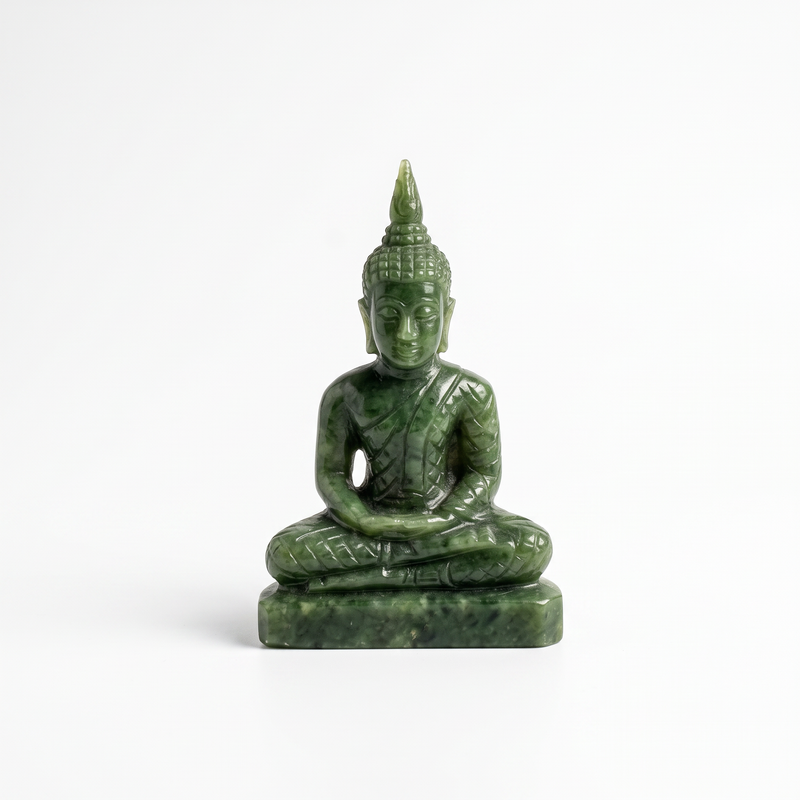
Green jade answers to Jupiter, the planet of growth and generosity in the Chinese and the Indian systems alike. It is the heart stone of the East and it is given between people rather than to yourself. It softens what has gone hard.
White Jade·Blue Sapphire
Clarification
Venus rules the season of cutting back, so white jade settles a desk. Blue sapphire answers to Saturn and has the harsher reputation. Every tradition that has handled it says the same thing. It strips out whatever is not true.
Green Jade·Blue Sapphire·Ruby
Protection
The oldest use of stone there is. A guardian by the door, a ruby against the skin, a sapphire against the year, and on jade a belief so blunt that people still repeat it without softening it at all. A piece that cracks took the blow for you.
Amethyst·Blue Sapphire
Spiritual connection
Both of these answer to Mercury, the planet of stillness and depth. Amethyst sits in the prayer beads because it holds attention through a hundred and eight of them without the mind wandering off, and blue sapphire has been the clergy stone on three continents for the same reason. Neither is decoration.
Yellow Jade·Yellow Sapphire
Prosperity
Yellow was the emperor's colour and nobody else in China was allowed to wear it. Jupiter is expansion in both systems that name him. The stone goes where money is counted and guests are received, set high enough to be seen from the door.
Ruby·Orange Agate
Vitality and courage
China gives the ruby to Mars. India gives it to the Sun. It is the same idea told twice. Wear it when the energy has gone out of the days, or when a move has to be made and hesitating is the only thing in the way.
In the workshop now
See everything
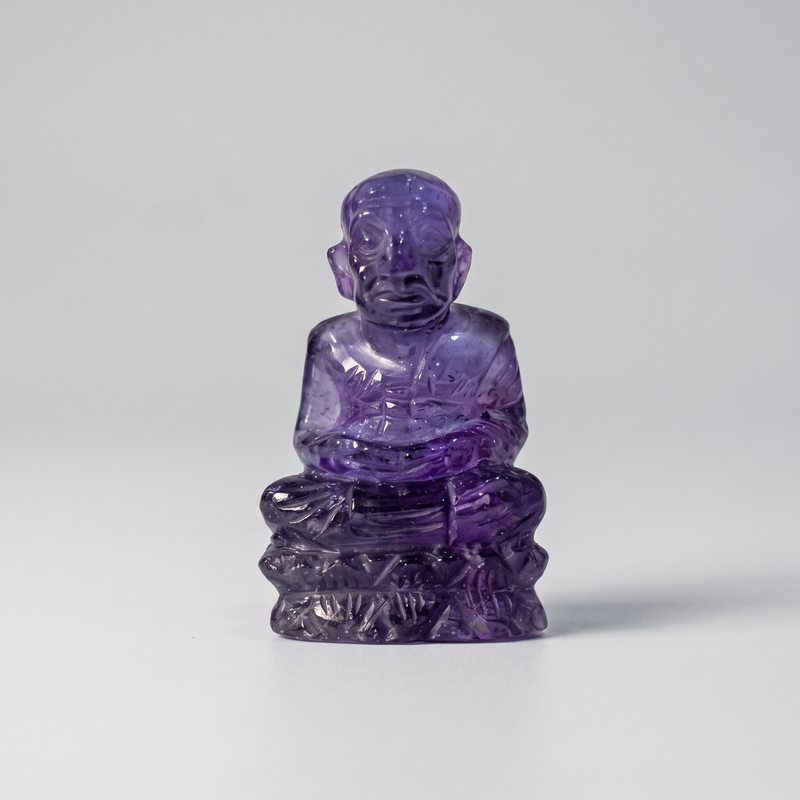
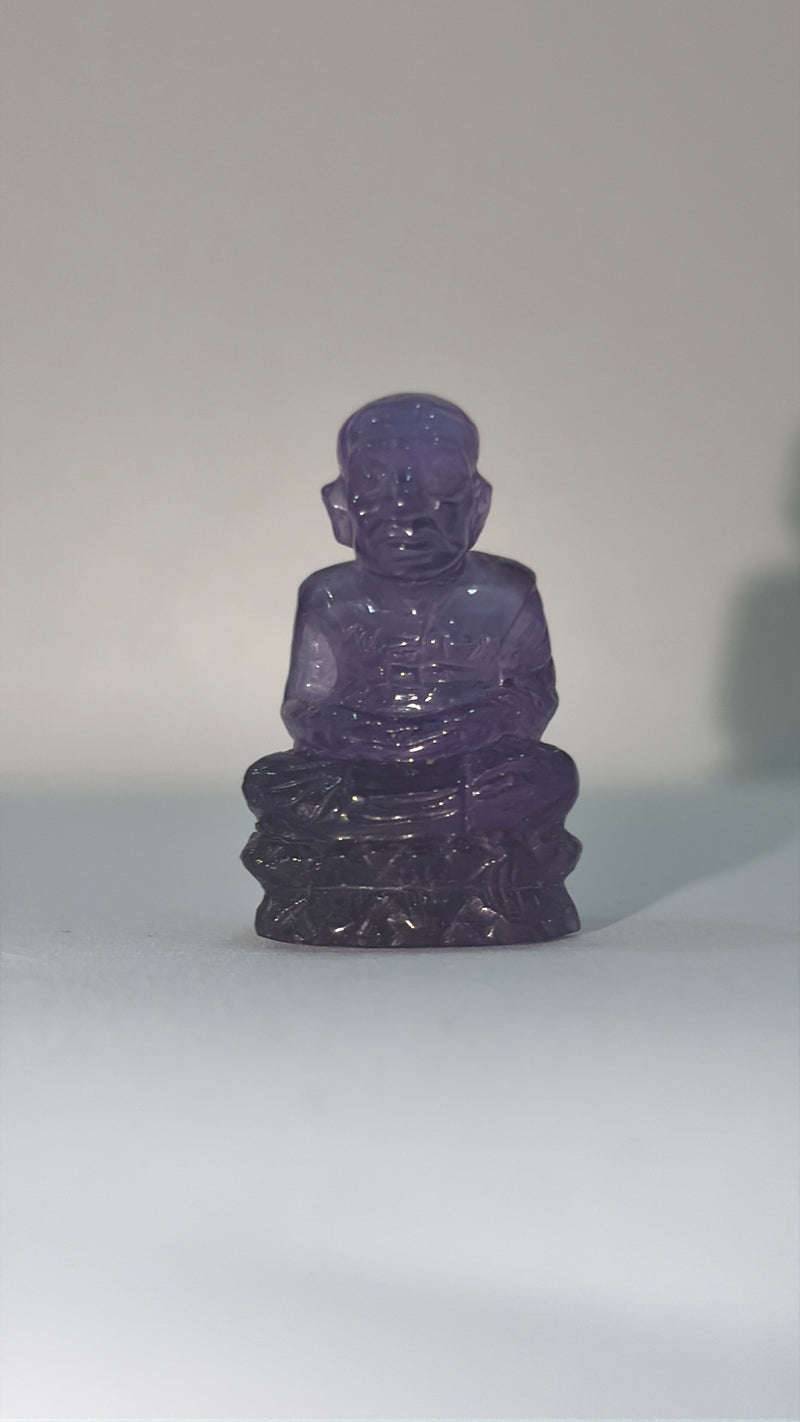
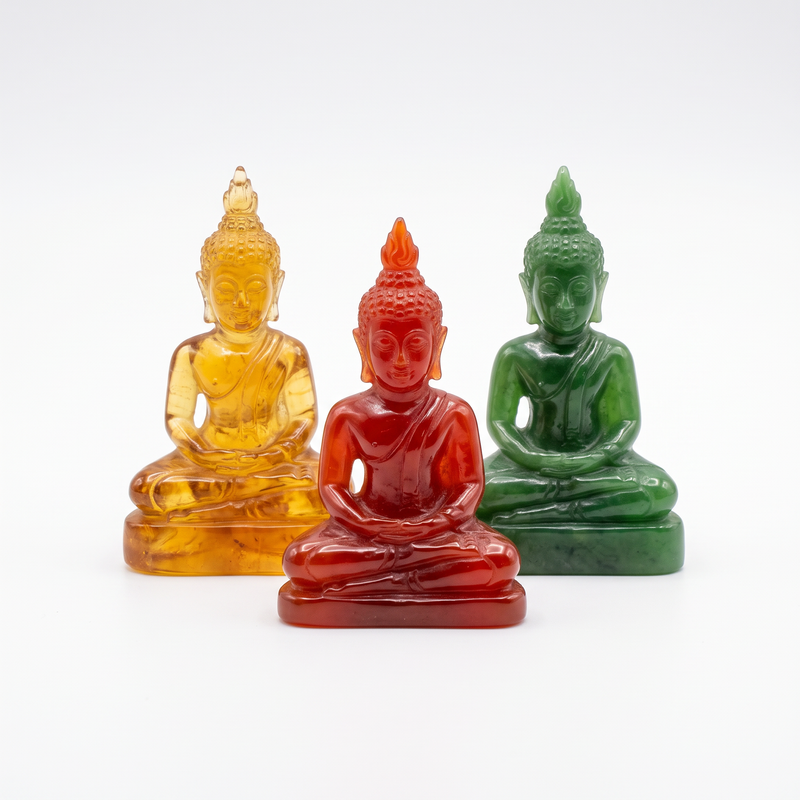
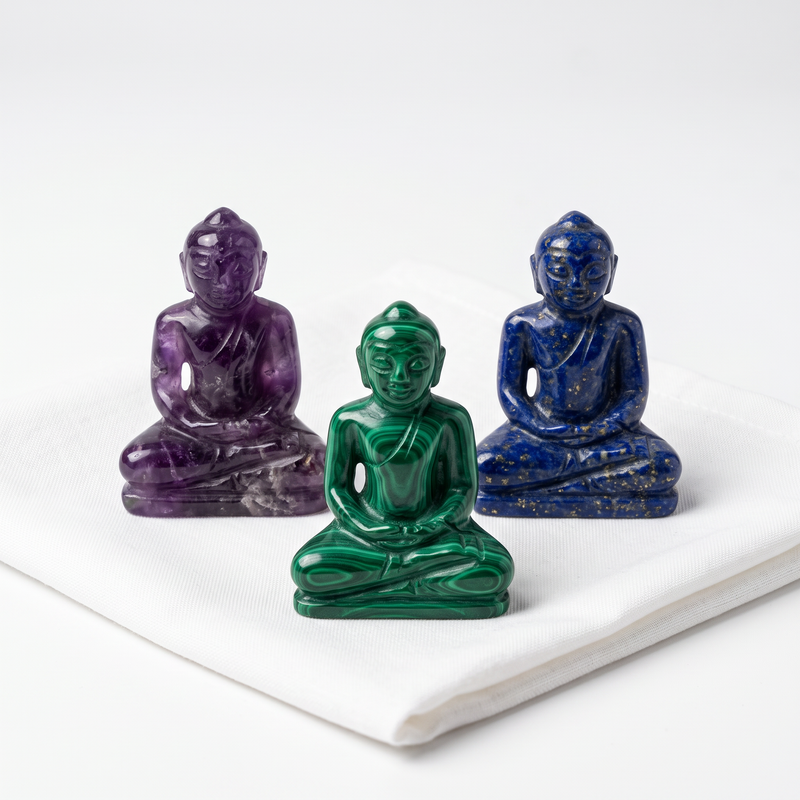
Pieces looking for a house

Two ways to keep one
佩之 · 供之
On the shelf, or against the skin
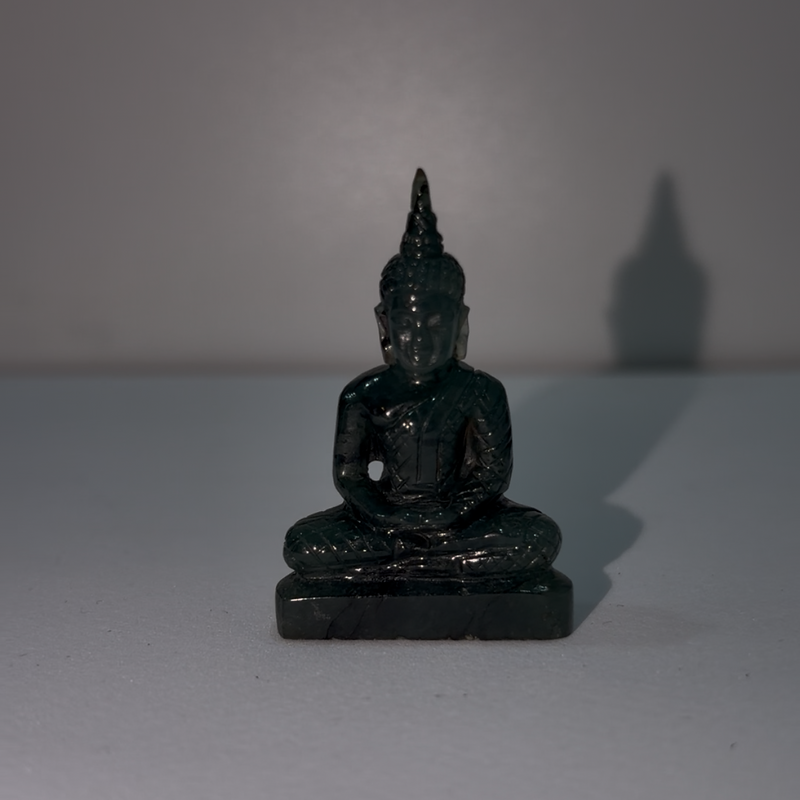
A statuette works on a room. You set it facing the door, high enough that you look up at it, and it stays put.
A pendant works on the person carrying it. It warms against the body, it goes where you go, and tradition is clear about which of the two takes the blow.
Wu Xing, the five elements
The five elements, and the stone of each
Chinese astrology does not sort the world into good and bad. It sorts it into five, and gives each one a planet. Jupiter, Mars, Saturn, Venus, Mercury. Each carries a direction, a season and a colour, and each carries a stone. Find the element your year has been short of.
Wood
JupiterGrowth, beginnings, generosity, what is still starting Green Jade Yellow SapphireFire
MarsVitality, courage, warmth, being seen RubyEarth
SaturnBalance, trust, the household, the still point Yellow Jade Orange AgateMetal
VenusClarity, order, letting go, what is finished cleanly White JadeWater
MercuryStillness, depth, wisdom held quietly Blue Sapphire Amethyst
生 · The generating cycle. Each one feeds the next.
木火土金水木
Wood feeds Fire. Fire makes Earth, Earth yields Metal, Metal carries Water, and Water grows Wood again. To strengthen an element in yourself or in a room, keep the stone of the one before it. That is the one doing the feeding.
克 · The overcoming cycle. Each one checks another.
木土水火金木
Wood parts Earth. Earth dams Water, Water quenches Fire, Fire melts Metal, Metal cuts Wood. When there is too much of something, too much heat or too much stillness or too much holding on, the stone that checks it is the one to bring in.
Why stone
Older than every tradition that uses it
A piece of jade in your hand was already old when the first person decided it meant something. That is the argument. Every culture that picked up a stone got there on its own.
The Chinese buried their dead in jade, the Maya laid it in the mouths of theirs on the far side of an ocean neither had crossed, and the Greeks cut amethyst into cups so that their heads would stay clear through a long night. Three answers. No conversation. Seven thousand years later nobody has stopped, and a carved stone is still one of the few things you can own that will be here unchanged when whoever comes after you opens the drawer.
When it arrives
How a piece is received
None of this is required. It is how it has been done, and doing it makes the object yours instead of something you bought.
01
Receive 受
Open it alone. Hold it a moment before you put it down, because in Thailand a piece is not yours until you have held it once in both hands.
02
Place 安
Higher than your heart, never on the floor, facing the way people come in. The rule is easy to keep. A Buddha looks at who enters. A guardian looks at what enters.
03
Keep 養
A dry cloth is all it needs. Once a month the old practice puts the stone out under a full moon overnight and brings it in at dawn. It is the one piece of upkeep everyone seems to agree on.
04
Pass on 傳
Jade is meant to be handed down, and a worn piece is held to be better than a new one. It is the only thing in the house that is supposed to outlive you.
The superior man compares his virtue to jade.
Confucius · Li Ji, Book of Rites